
Why does a cheap industrial boiler almost always cost more?
“We found a boiler almost 30% cheaper.”
That is the phrase that opens the story of many plants which, a year or two later, run into unexpected costs, unplanned production stoppages and expensive repairs.
At first glance the decision looks obvious: if the equipment does the same job, why pay more? But industrial boiler equipment is not a household appliance and not a consumable. It is the heart of many production processes, and the stable operation of the plant depends on it.
That is why experienced technical directors and chief engineers judge not the purchase price but the overall cost of operating the equipment.
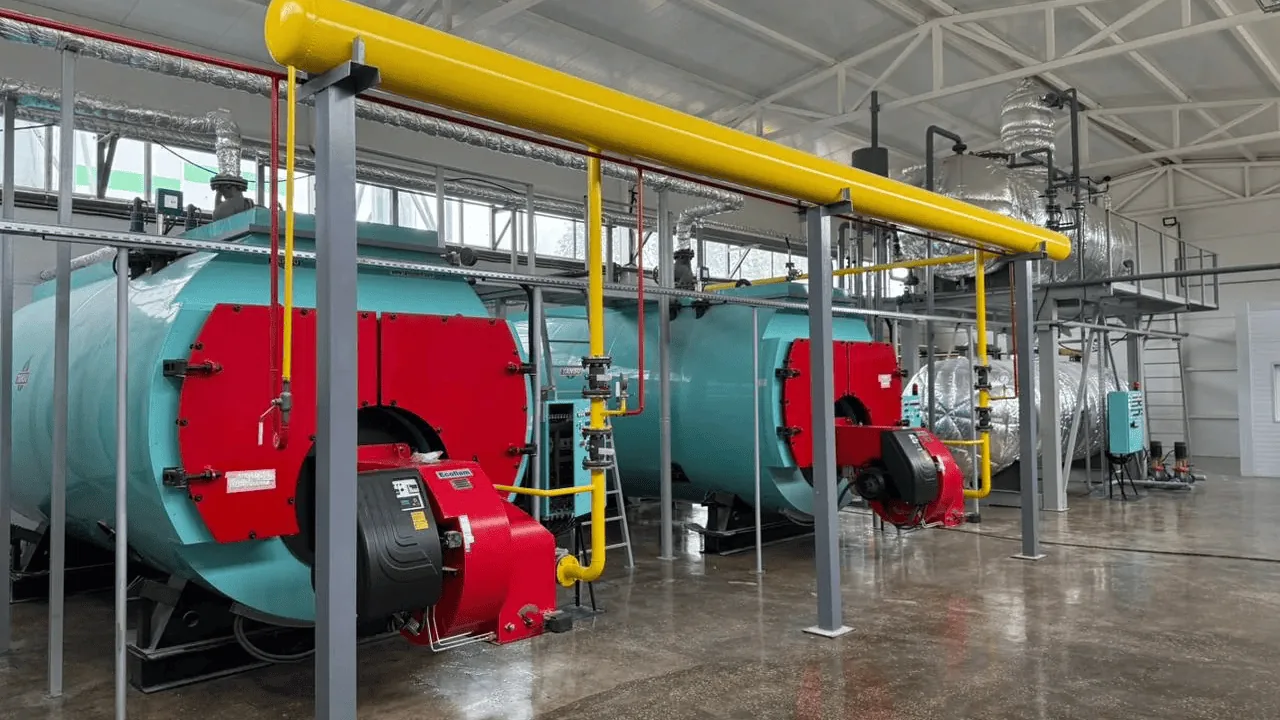
The purchase price is only the beginning
When a plant receives a commercial offer, attention usually focuses on the bottom-line figure.
But once the contract is signed, an entirely different set of costs begins:
- fuel consumption;
- electricity;
- maintenance;
- consumables;
- spare parts;
- the work of service engineers;
- production downtime during repairs.
In the end, the initial saving can turn out to be far smaller than the costs that follow.
The most expensive mistake is a production stoppage
Picture a plant that ships millions of tenge or rubles worth of product every day.
If the boiler fails even for a single day, the plant faces a whole chain of consequences:
- a stopped process line;
- idle staff;
- slipped delivery deadlines;
- contractual penalties;
- lost customer trust;
- extra costs for emergency repairs.
The cost of such a stoppage often exceeds the price difference between cheap and quality equipment.
Where makers of cheap equipment usually cut costs
To bring the price down, some manufacturers use cheaper materials or components.
That can show up as:
- thinner steel;
- components with a limited service life;
- simplified thermal insulation;
- less capable automation;
- limited quality control.
At the moment of purchase these differences are invisible — and it is exactly these that begin to tell on operation months or years later.
When management’s saving becomes the engineers’ problem
The purchase decision is often made on price first, without the chief engineer and the technical team having a real say.
The problems surface only after commissioning: no technical support, trouble with spare parts, repairs and maintenance.
In the end, the saving made at procurement turns into extra responsibility for the people who answer for the equipment’s operation.
So when choosing an industrial boiler, it is important to weigh not only the price but also the opinion of the specialists who will be responsible for running it.
Energy efficiency — the hidden cost item
For most plants, fuel is one of the largest items of cost.
Even a small difference in equipment efficiency can add up to substantial extra spending every year.
Modern industrial boilers are designed to extract the most from the fuel’s thermal energy, minimise losses and hold stable operation across varying loads.
So when comparing equipment, weigh not only the purchase price but also the operating costs to come.
Why service matters as much as the boiler itself
Even the best equipment needs regular maintenance.
A simple question arises:
Who will help the plant five or ten years from now?
Before buying, it is worth finding out:
- whether there is a service team;
- whether spare parts are available;
- how quickly specialists can reach the site;
- whether the manufacturer provides technical support.
Manufacturers who stay with their equipment through its whole service life help plants avoid serious downtime and extend the equipment’s working years.
The manufacturer’s experience matters
The industrial equipment market has grown considerably in recent years. Yet far from every manufacturer has the same depth of experience.
Companies with a long history usually have:
- their own engineering school;
- proven production technology;
- a quality-control system;
- delivered projects across a range of industries;
- accumulated experience with non-standard problems.
That is why many plants pay particular attention not only to the equipment’s specifications but also to the manufacturer’s reputation.
For example, TANSU has been developing and manufacturing industrial boiler equipment for more than three decades. The company delivers projects for plants across many industries, controls the full production cycle and pays particular attention to manufacturing quality, energy efficiency and safety.
The questions to answer before buying
Before making the final decision, it helps to ask the supplier a few questions:
- What is the expected service life of the equipment?
- What materials are used in production?
- Are there quality certificates?
- How is service support organised?
- How quickly are spare parts supplied?
- What projects have already been delivered?
- What warranties does the manufacturer provide?
The answers will help you judge not only the cost of the equipment but also its reliability over the long run.
So what is actually the better deal?
Cheap equipment looks attractive only at the moment of purchase.
But once you factor in:
- fuel consumption;
- the cost of maintenance;
- the likelihood of failures;
- service life;
- the cost of downtime;
it becomes clear that the better deal is the equipment that keeps working stably and efficiently for many years.
That is why more and more plants treat an industrial boiler as a long-term investment, not a one-off purchase.
Conclusion
Saving money on the purchase of industrial equipment does not always mean a saving for the business.
What matters much more is the total cost of ownership, the manufacturer’s reliability, manufacturing quality and the availability of long-term service support.
That approach cuts operating costs, avoids unplanned downtime and keeps the plant running stably for years to come.